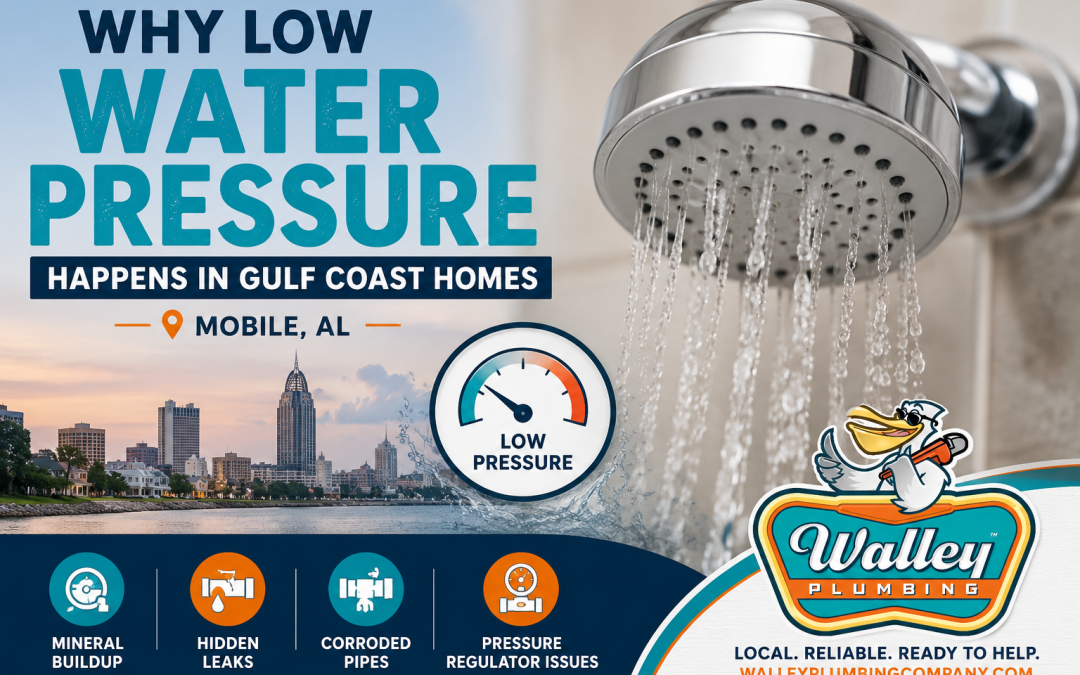
Why Low Water Pressure Happens in Gulf Coast Homes
Low water pressure is one of the most frustrating plumbing problems homeowners face. Whether you’re trying to shower, wash dishes, or run multiple fixtures at once, weak water flow can quickly disrupt your day. For homeowners along the Gulf Coast — especially in Mobile, AL — low water pressure is often caused by a combination of coastal weather conditions, aging plumbing systems, and mineral buildup.
Understanding why low water pressure happens in Gulf Coast homes can help you identify problems early and avoid costly plumbing repairs later. In this guide, we’ll explain the most common causes, how Gulf Coast conditions affect plumbing systems, and when to call a professional plumber in Mobile, AL.
If you’re experiencing ongoing plumbing issues, the team at Walley Plumbing Company can help diagnose and repair water pressure problems quickly and professionally.
What Is Considered Low Water Pressure?
Water pressure refers to the force that pushes water through your plumbing system. Most homes operate best between 40 and 60 PSI (pounds per square inch). When pressure drops below that range, homeowners often notice:
- Weak shower flow
- Faucets taking longer to fill sinks
- Washing machines running slowly
- Sprinkler systems underperforming
- Inconsistent hot water delivery
Low water pressure can affect one fixture, several fixtures, or the entire home depending on the source of the problem.
Common Causes of Low Water Pressure in Gulf Coast Homes
1. Mineral Buildup Inside Pipes
Homes in Mobile, AL and throughout the Gulf Coast often deal with hard water conditions. Over time, minerals like calcium and magnesium accumulate inside pipes and fixtures. This buildup narrows the interior of plumbing lines and restricts water flow.
Galvanized steel pipes are especially vulnerable because corrosion and scale buildup happen faster in humid coastal environments.
Signs of mineral buildup include:
- Reduced water flow in older homes
- White residue around faucets
- Uneven pressure throughout the house
- Frequent faucet clogging
According to the U.S. Geological Survey, hard water can significantly impact plumbing systems over time.
2. Corroded Plumbing Pipes
Many older homes in Mobile still contain galvanized pipes that corrode internally after decades of use. Corrosion narrows the inside diameter of pipes and limits water flow.
Gulf Coast humidity and salty air can accelerate pipe deterioration, especially in crawl spaces or exposed plumbing areas.
Common signs of corroded pipes include:
- Rust-colored water
- Low pressure throughout the home
- Leaks appearing frequently
- Discolored sinks or tubs
If your home was built before the 1980s and still has original plumbing, pipe replacement may be necessary.
For homeowners considering upgrades, Walley Plumbing Company offers professional plumbing repair services in Mobile, AL.
3. Hidden Plumbing Leaks
Undetected leaks are another major cause of low water pressure. Even a small leak inside walls, under slabs, or beneath the yard can reduce pressure significantly.
Gulf Coast soil movement and heavy rain can place stress on underground pipes, increasing the risk of leaks over time.
Signs of hidden leaks include:
- Higher water bills
- Damp drywall or flooring
- Mold or mildew smells
- Soft spots in the yard
- Constantly running water meter
Leak detection should always be handled by a licensed plumber to prevent structural damage.
4. Municipal Water Supply Problems
Sometimes the issue isn’t inside your home at all. Water main repairs, utility maintenance, or increased local demand can temporarily reduce pressure in neighborhoods across Mobile, AL.
This is especially common during:
- Hurricane preparation periods
- Peak summer water usage
- Infrastructure repairs
- Fire hydrant testing
If the entire neighborhood is experiencing low pressure, contacting your local utility provider may help determine if there’s a municipal issue.
The City of Mobile Water Services often provides updates regarding water system maintenance and service interruptions.
5. Faulty Pressure Regulators
Some homes use pressure-reducing valves (PRVs) to control incoming water pressure. When these devices fail, they can suddenly cause extremely low or high water pressure throughout the home.
Signs of a failing pressure regulator include:
- Sudden pressure changes
- Banging pipes
- Weak water flow in every fixture
- Fluctuating shower temperature
A licensed plumber can test your PSI levels and determine whether the regulator needs adjustment or replacement.
6. Clogged Faucets and Showerheads
Sometimes low water pressure only affects one fixture. In many cases, sediment or mineral buildup inside aerators and showerheads is the culprit.
This issue is common in Gulf Coast homes due to hard water deposits accumulating over time.
You may notice:
- Uneven spray patterns
- Reduced pressure at one faucet only
- Visible white scale buildup
Cleaning or replacing the fixture often restores normal pressure quickly.
7. Partially Closed Shut-Off Valves
After plumbing repairs or maintenance, shut-off valves may not be fully reopened. Even slightly restricted valves can dramatically reduce water flow.
Check:
- Main water shut-off valve
- Water meter valve
- Fixture supply valves under sinks
If valves appear fully open and pressure remains low, further plumbing inspection may be needed.
Why Gulf Coast Conditions Affect Plumbing Systems
The Gulf Coast climate creates unique challenges for residential plumbing systems. Homes in Mobile, AL experience:
- High humidity
- Salt air exposure
- Frequent storms
- Heavy rainfall
- Soil shifting
- Hard water conditions
These environmental factors contribute to faster pipe corrosion, foundation movement, and plumbing wear compared to inland areas.
Additionally, older neighborhoods throughout Mobile often have aging infrastructure that may increase the likelihood of water pressure problems.
Routine plumbing inspections can help Gulf Coast homeowners catch issues before they become major repairs.
How to Test Water Pressure at Home
Homeowners can perform a basic water pressure test using a pressure gauge attached to an outdoor spigot.
Typical residential PSI ranges include:
- 40–60 PSI: Normal
- Below 40 PSI: Low pressure
- Above 80 PSI: Excessively high pressure
If your home consistently tests below normal ranges, it’s best to schedule a professional plumbing inspection.
When to Call a Professional Plumber
While minor fixture clogs can often be fixed easily, persistent low water pressure usually requires professional diagnosis.
You should contact a plumber if:
- Pressure drops suddenly
- Multiple fixtures are affected
- Water appears rusty
- Leaks are suspected
- Pipes are older or corroded
- DIY fixes don’t work
An experienced plumber can identify hidden leaks, inspect pipe conditions, and recommend long-term solutions tailored to Gulf Coast homes.
If you need help restoring water pressure in Mobile, AL, contact Walley Plumbing Company for professional service.
Preventing Low Water Pressure Problems
Preventative maintenance is one of the best ways to avoid water pressure issues.
Homeowners should:
- Schedule annual plumbing inspections
- Replace aging galvanized pipes
- Install water softeners if needed
- Check for leaks regularly
- Flush water heaters annually
- Clean faucet aerators routinely
Preventative care helps extend the life of your plumbing system while maintaining strong water flow throughout your home.
FAQ: Why Low Water Pressure Happens in Gulf Coast Homes
Why is my water pressure suddenly low in my Mobile, AL home?
Sudden low water pressure can result from plumbing leaks, municipal water supply issues, failing pressure regulators, or partially closed shut-off valves. A professional plumber can identify the exact cause.
Can Gulf Coast humidity damage plumbing pipes?
Yes. High humidity and salty coastal air can accelerate corrosion in older metal pipes, especially galvanized steel plumbing systems common in older homes.
Does hard water cause low water pressure?
Yes. Hard water minerals accumulate inside pipes, faucets, and showerheads over time, restricting water flow and reducing pressure.
How do I know if I have a hidden plumbing leak?
Signs include higher water bills, damp walls, mold smells, soft yard spots, or continuously running water sounds. Professional leak detection may be necessary.
Should I replace old galvanized pipes?
If your home has aging galvanized plumbing and ongoing water pressure problems, replacement is often recommended to improve water flow and reduce future leaks.
Who should I call for low water pressure repair in Mobile, AL?
Homeowners in Mobile can contact Walley Plumbing Company for professional plumbing inspections, leak detection, and water pressure repairs.
Final Thoughts
Low water pressure is a common issue for Gulf Coast homeowners, but understanding the root causes can help you address problems quickly. From mineral buildup and corroded pipes to hidden leaks and coastal climate conditions, several factors can impact your plumbing system in Mobile, AL.
Routine maintenance and professional plumbing inspections are essential for keeping your home’s water pressure strong and reliable year-round.
If you’re dealing with low water pressure or other plumbing concerns, reach out to Walley Plumbing Company for trusted plumbing services in Mobile, Alabama.